Pages

Ads 468x60px

Featured Posts

GOSSIP Celebrity Gossip Blog Headline Animator

GOSSIP Celebrity Gossip Blog

Wednesday, 13 August 2014

Expats could be forced to return home under new government tax proposals affecting rental property in the UK.

  The plans, forwarded by the Chancellor George Osborne, would see the removal of personal tax allowance privileges for overseas residents who also claim income in the UK. If the Chancellor goes ahead with the plans, couples drawing a government pension could also face a £4,000 (€5.000) cut in their yearly income, forcing many to return home. UK government pension plans are only taxable in Britain, meaning that former civil servants living abroad could see a rise in their tax obligations.

Under the current system, expatriates and EU nationals have UK-earned income offset with a personal tax allowance of £10,000 (€12.570), but the planned reforms could jeopardise those expats who live under a carefully considered budget. Up to 400,000 expats could be affected by the proposals which would inject the treasury with an extra £400 million (€503 million) a year.

Threat of EBOLA as 224 african immigrants rescued off Spanish coast

Maritime rescue vessels picked up a total of 224 people from 23 dinghies in the Strait of Gibraltar on Monday morning.  Both men and women, believed to all be Sub-Saharan Africans, are reported to be in a good state of health. They are currently being moved to Tarifa where they will be attended to by Red Cross volunteers.

Thursday, 7 August 2014

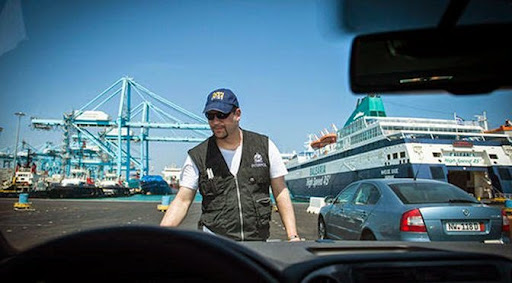
Spain: INTERPOL Targets Trafficking Of Stolen Vehicles

In an INTERPOL-supported operation in Spain targeting the trafficking of stolen vehicles, nearly 20 vehicles were recovered and some 15 individuals arrested. Led by the Spanish National Police, Operation Paso del Estrecho (which means ‘crossing the straits’), was conducted from 28 July to 1 August at the port of Algeciras in southern Spain, a known route used by organised criminal networks to smuggle cars stolen from throughout Europe into North Africa.

With the assistance of INTERPOL’s Stolen Motor Vehicles (SMV) unit, police monitored car ferries leaving the port en route to Morocco, with some 5,000 vehicles screened against INTERPOL’s SMV database. INTERPOL coordinated the deployment of 28 experts from seven countries to support the operation. The experts are members of the INTERPOL Stolen Motor Vehicles (SMV) Task Force, comprising police and private investigators who support member countries with operations targeting the theft and trafficking of motor vehicles. The INTERPOL SMV database contains more than 7 million records submitted by 128 member countries. In 2013, countries searched the database more than 125 million times, resulting in 117,000 positive hits. “Operation Paso del Estrecho was very important because it allowed us not only to detect and recover stolen vehicles from Spain and other European countries, but also to obtain crucial information that will allow us to continue our investigations into the organized crime groups dedicated to illegal vehicle trafficking,” said Ángel Arroyo Morales, Head of the vehicle crime investigation unit of the Spanish National Police Central Squad of Organized Crime. “There is no doubt that with strong cooperation between INTERPOL and police across Europe and beyond, we will continue to recover even more stolen vehicles before they can be used for criminal purposes,” he concluded. In addition, 15 people were arrested during the operation, including one Ukrainian and two Spanish nationals arrested in connection with a major investigation of the Central Squad of Organized Crime of the Spanish National Police.

They are suspected of being the masterminds behind a vast trafficking ring transporting stolen luxury cars between Spain and Ukraine, via Poland and Moldova. The stolen vehicles seized came from various European countries including Belgium, France, Germany, Italy, the Netherlands and Sweden, demonstrating the transnational character of this crime. “The trafficking of stolen vehicles is a crime that knows no borders. The only way to effectively combat the organized criminal networks behind this crime is therefore through coordinated joint actions, as evidenced by this successful operation,” said INTERPOL’s Director of Specialized Crime and Analysis, Glyn Lewis. Operation Paso del Estrecho is an annual initiative conducted by Spanish police in Algeciras – a major gateway between Europe and Africa which sees approximately 4.8 million people and 1.3 million vehicles pass through each year – to prevent stolen vehicles from leaving the country and to identify and disrupt the criminal groups responsible for the illicit trafficking. Highlighting the links between organized crime and the trafficking of stolen motor vehicles – which are often used in the commission of other serious crimes – is a key part of INTERPOL’s global Turn Back Crime campaign. The campaign aims to raise awareness of these hidden links, and of the very real effect these crimes can have on people’s daily lives.

Wednesday, 6 August 2014

Major crime gang link as Matthew Macklin’s coach survives assassination attempt

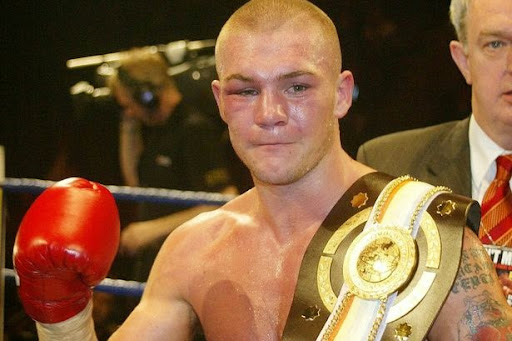
Former European boxing champion Jamie Moore is under armed police guard in a Spanish hospital after he was shot in the legs in Marbella at the weekend. 

Moore is currently based in Spain with his wife and two children where he is training Irish boxer Matthew Macklin at the MGM gym in Puerto Banus ahead of his upcoming fight in the National Stadium on August 30. Moore was shot in both legs and the foot when the gunman targeted him after he left a party on Saturday night but his injuries are not believed to be life-threatening. “Just to let everyone know Jamie Moore is still in hospital but he should be ok,” Macklin tweeted last night. “He was shot in his legs but the doctors have said there shouldn’t be any serious or permanent damage done.”

The coach and well-respected Sky Sports pundit who has no involvement in crime agreed to become Macklin’s coach last year, but gardai sources have indicated that “special surveillance plans” are in place for the upcoming fight. The villa where Moore was shot is owned by boxing manager Daniel Kinahan, a key member of the Christy Kinahan crime syndicate which operates a sizeable crime operation on Spain’s infamous Costa del Crime. Nicknamed the ‘Tipperary Tornado’, Birmingham-born Macklin has no involvement in crime but has been photographed in the company of major gangsters Gary Hutch and Daniekl Kinahan at major events.

Monday, 4 August 2014

Former British and European champion boxer Jamie Moore has been shot in Marbella

Former British and European champion boxer Jamie Moore has been shot in Marbella - apparently in both legs.

Moore, the former European light-middleweight champion, was in Spain working at a gym owned by boxer, Matthew Macklin, who he is training.

It is understood the 35-year-old Moore, from Walkden, Greater Manchester, has now left hospital after treatment.

Moore, highly regarded in the sport, was on the verge of a WBC title shot, in 2009, but decided to quit the sport in 2010 on medical grounds.

Moore is a former two-time British light-middleweight champion and Commonwealth champion.

A source told the Manchester Evening News: "It would appear he was out and about, not at the gym, when he was shot."

A spokesman for the Foreign Office confirmed that a British national had been shot over the weekend.

Moore was helping prepare Mackin for a fight in Dublin later this month against Argentinian, Jorge Sebastian-Heiland for the WBC international midldeweight title.

As well as a working as a trainer Moore has worked as a TV commentator.

He is a friend of former boxer, Ricky 'The Hitman' Hatton, who told the Manchester Evening News 'battler' Moore would bounce back from the attack.

He said: "I'm devastated by this news. Jamie is a great pal of mine and my thoughts are, of course, today with him and his family.

"He's a great battler and if anyone's going to pull through in hospital it'll be him."

Moore has spoken at several charity events and fundraising dinners for boxers' whose carrers have been cut short by injury.

Moore won a legendary fight with Macklin in 2006 at the George Carnell Leisure Centre in Davyhulme in what was dubbed the 'fight of the year'.

He won 32 of 37 bouts with 23 being knockouts.

Moore boxed an an amateur before turning professional in 1999.

One of Moore's most memorable moments came last year in a three-round knockout victory over Michele Piccirillo for the European belt.

He will also be remembered for his domestic fights with Matthew Macklin, Michael Jones and Ryan Rhodes.

Local Spanish police are investigating the shooting and are likely to alert Britain's National Crime Agency.

So far there have been no arrests.


Sunday, 3 August 2014

High Alert in Casablanca Airport After Death of Woman Returning from Mecca

Morocco’s Mohammed V international airport is under high medical alert since a 76-year old woman died immediately upon her return from Mecca. Within the first hours after her death, Moroccan authorities feared the death was caused by the Ebola virus. But a statement from the Ministry of Health said the woman suffered from an acute “pulmonary edema.” It is unclear, however, whether this statement will dispel people’s fears regarding the safety of the 30,000 Moroccans who will go to perform pilgrimage next September. Last June, following the emergence of Ebola or Mers (Middle East Respiratory Syndrome) virus in Saudi Arabia, Morocco recommended its pilgrims to cancel their planned trips to Mecca this year. The Moroccan Ministry of health advised Moroccans who decide to go ahead with their pilgrimage to put on masks, which are offered for free by Moroccan authorities.

Ebola terror at Gatwick as passenger collapses and dies getting off Sierra Leone flight

Airport staff tonight told of their fears of an Ebola outbreak after a passenger from Sierra Leone collapsed and died as she got off a plane at Gatwick. Workers said they were terrified the virus could spread globally through the busy international hub from the West African country which is in the grip of the deadly epidemic. The woman, said to be 72, became ill on the gangway after she left a Gambia Bird jet with 128 passengers on board. She died in hospital on Saturday. Ebola has killed 256 people in Sierra Leone. A total of 826 have died in West Africa since the outbreak began in February. Tests were carried out to see if the woman had the disease. The plane was quarantined as ­officials desperately tried to trace everyone who had been in contact with the woman. Airport workers faced an anxious wait to see if the woman had Ebola. One said: “Everyone’s just ­petrified. “We’ve all seen how many people have died from Ebola, especially in Sierra Leone, and it’s terrifying.”

Tuesday, 22 January 2013

Ms Sandiford to be executed for drug trafficking.

A British grandmother has been sentenced to death by firing squad for smuggling almost 5kg of cocaine into Bali.

Lindsay Sandiford was arrested in May last year after she tried to enter the Indonesian holiday island with illegal drugs worth £1.6 million hidden in her suitcase.

Local prosecutors had called for the 56-year-old housewife to be jailed for 15 years. But today there were gasps in the Bali courtroom when a panel of judges announced Ms Sandiford would be executed for drug trafficking.

As the shock verdict was announced, Ms Sandiford, from Gloucestershire, slumped back in her chair in tears before hiding her face with a brown sarong as she was led out of the courtroom.

Thursday, 6 September 2012

experts believe we can actually become "addicted" to stress.

Stress can be physical,And then there’s the kind that’s in our heads — that OMG I’m so overwhelmed right now feeling. While psychological stress has some definite downsides (chronic freak-outs may increase our risk for cancer and other diseases), take a moment to exhale. In moderate amounts, stress can boost our focus, energy, and even our powers of intuition.

Still, in some cases, stress does more than light a productivity-boosting fire under our butts. Both emotional and physical stress activate our central nervous system, causing a “natural high,” says Concordia University neuroscientist and addiction specialist Jim Pfaus. “By activating our arousal and attention systems,” Pfaus says, “stressors can also wake up the neural circuitry underlying wanting and craving — just like drugs do.”

This may be why, experts believe, some of us come to like stress a little too much.

Type A and Type D personalities — or people prone to competitiveness, anxiety, and depression — may be most likely to get a high from stressful situations, says stress management specialist Debbie Mandel. Stress “addicts,” Mandel says, “may also be using endless to-do lists to avoid less-easy-to-itemize problems — feelings of inadequacy, family conflicts, or other unresolved personal issues.”

Some stress junkies have difficulty listening to others, concentrating, and even sleeping because they can’t put tomorrow’s agenda out of their minds, explains Mandel. Others tend to use exaggerated vocabulary — craaazy busy right now, workload’s insane!! And some begin to feel anxious at the mere thought of slowing down their schedule.

But psychologist and addiction researcher Stanton Peele cautions against labeling anyone a stress addict. “Only when that pursuit of stress has a significant negative impact on your life could it qualify as addiction,” he said, adding that many people are able to effectively manage — and in fact thrive under — high stress conditions. (Think: Olympic athletes or President Obama.)

 Study: Stress Shrinks the Brain and Lowers Our Ability to Cope with Adversity

For budding stress “addicts” or for those who just, well, feel overwhelmed, here are some tips to dial down that anxiety:

  • Seek professional help if you’re verging on burnout. (Not only can hashing it out with a therapist take a load off your mind. Some studies suggest it also boosts physical fitness.)
  • Do something creative. Mandel recommends carving out a once-weekly time not to think about tomorrow’s agenda by painting, cooking, writing, dancing, or anything else that’ll take you off the clock temporarily.
  • Take it outside. Numerous studies show spending time in nature improves general well-being, lowers anxiety, stress and depression, and even boosts self-confidence. Especially for women. (As it turns out, most addiction recovery centers offer outdoor-immersion programs.)
  • Calm down quickly. If you really don’t have time for any of the above, these 40 tricks to chill take five minutes or less.

Some of us may seek out stress a bit more excessively than others and struggle to just relax. It takes skill to handle hectic agendas and long lists of responsibilities — without losing sleep or feeling frazzled. So try these tips and try not to freak out.

Worried that you or someone you know seeks out stress a little too much? Think stress addiction is a myth? Tell us about it in the comments section below.


For those red wine drinkers who’ve been feeling morally superior about all the health benefits of the relaxing glass or two sipped during dinner, there’s some bad news on the horizon.

 Turns out, those glasses of wine would be a lot healthier if they were non-alcoholic, a new study shows.  Spanish researchers led by Gemma Chiva-Blanch of the University of Barcelona found that non-alcoholic red wine reduced blood pressure in men at high risk for heart disease better than standard red wine or gin, according to the study published in the American Heart Association journal Circulation Research. Although the reduction in both systolic and diastolic blood pressure was modest, decreases of just 4 and 2 mm Hg have been associated with a 14 to 20 percent reduction in heart disease and stroke, the researchers pointed out. “The daily consumption of dealcoholized red wine could be useful for the prevention of low to moderate hypertension,” they concluded.  Although there have been many studies on the impact of moderate drinking on health, the findings have been mixed, with some studies showing a benefit and others suggesting none. The new study found that 3 ounces of gin a day had no impact on blood pressure, while consumption of regular red wine led to a small, but not statistically significant, improvement. The new study suggests that if you’re going to have a drink, red wine would be the healthiest choice, said Dr. Kelly Anne Spratt, a heart disease prevention specialist and a clinical associate professor of medicine at the University of Pennsylvania. Still, Spratt said, “while there are those of us in cardiology who believe in the benefits of red wine, we want to be wary. We’re not going like gangbusters recommending people go out and start drinking. There are a lot of problems associated with drinking, like weight gain, cardiomyopathy, alcoholism, an increased breast cancer risk in women who consume two or more drinks a day.” Chiva-Blanch and her colleagues suspect that blood pressure improvements were due to the impact of polyphenols, a red wine component, on nitric oxide. The theory is that nitric oxide molecules help blood vessels relax, which allows better flow and more blood to reach the heart and other organs. For the new study, Chiva-Blanch and her colleagues followed 67 men with diabetes or three or more cardiovascular risk factors. During the study, the men were all required to consume the same foods along with one of three drinks: 10 ounces of red wine, 10 ounces of non-alcoholic red wine or 3 ounces of gin. During the 12 week study, the men tried each diet/beverage combination for four weeks at a time. The researchers determined that the standard red wine and its nonalcoholic counterpart contained equal amounts of polyphenols, an antioxidant which has been shown to decrease blood pressure. Men who drank regular red wine saw minor reductions in blood pressure – too small, in fact, to be statistically significant. Those who drank gin with their meals saw no change in blood pressure. But men who drank non-alcoholic red wine saw a blood pressure decrease of about 6 mm Hg in systolic and 2 mm Hg in diastolic blood pressure. Chiva-Blanch and her colleagues concluded that their findings show that the alcohol in red wine actually weakens its ability to lower blood pressure.

Friday, 17 August 2012

ADDICTION charity Focus12 has received a huge financial boost after a codumentary about Russell Brand was shown last night.

The documentary Russell Brand: Addiction to Recovery resulted in an immediate boost in donations and inspired the managing director of Bury St Edmunds based Chevington Finance and Leasing to offer the charity £106,000 over three years.

Russell Brand attended Focus12, the Bury St Edmunds abstinence-based alcohol and drug rehabilitation centre, in 2003 and is now a patron of the charity, describing it as ‘a really excellent example of a small cost effective rehab that can help people change in dramatic ways’.

Chip Somers, Focus12’s chief executive, said: “Russell’s documentary and his work this year to raise the profile of abstinence based recovery has got people talking about addiction in a different way, and made them realise that there is a viable alternative to simply giving up on addicts, or parking them on methadone.

“We are blown away by the generosity of Chevington — this financial support will make a huge difference to us as a charity and will certainly mean we can continue to stay open and help those who need us for longer. Raising funds for a recovery charity has never been harder than it is at present, every day is literally a struggle to keep afloat and we are very grateful.”

Clive Morris, Managing Director of Chevington Finance and Leasing said: “My wife and I were incredibly touched by last night’s documentary, which inspired us to endorse the local treatment centre Focus12, and we have today agreed funding assistance for the charity of £106,000 over the next 4 years.

“We believe that as a successful, responsible and reliable company we have a duty to help local charities survive this recession and the work that Chip Somers and his team do is fantastic and we fully endorse their abstinence based programme and have seen what a difference it makes to people’s lives.”

Monday, 13 August 2012

London's secret music venue and their livestream act

boiler-room-ch1.jpg

With an invite-only door policy and super secret location, Boiler Room is London's most exclusive music venue. But elitism isn't the premise for its clandestine nature—in fact, anyone with an Internet connection can easily join in the fun. Using a simple webcam, the crew behind Boiler Room livestreams each set for the world to see free of charge, and each month more than a million viewers tune in to see performances by artists like James Blake, The xx, Roots Manuva, Neon Indian, Juan Maclean and more.

boiler-room-ch2.jpg

We recently chilled out to the smooth sounds of Brooklyn's How To Dress Well before rocking out to revered musician Matthew Dear, who brought down the house with an intense 40-minute DJ set. Keep an eye out for our interview with Dear, but for now you can get a little more insight into the underground music scene's most talked about livestream show by checking out our interview with assistant musical programmer and Boiler Room host Nic Tasker.

boiler-room-ch3.jpg
How important is it for Boiler Room to remain secret, at least in its location?

That is quite an important aspect of it, purely because it means when you do shows you don't get a lot of groupies, pretty much everyone in the room is either a friend of ours or one of the artist's. It helps to create a more relaxed atmosphere for the artist and I think they feel less pressure. They're also just able to chill out and be themselves more rather than having people being like, "Hi can I get your autograph?" If the artists are relaxed usually you get the best music.

It seems like there is more interaction among the crowd than at a typical venue, is that intentional?

It's definitely a social place. All the people that come down, most of them we know and they're all our friends. So they come down, hang, have a drink and just chill out, basically. From our very set-up, we do it with a webcam, we're not a highly professional organization but I think that's kind of the charm of it. The main thing is people come down with the right attitude.

boiler-room-ch4.jpg
How much of the show is prescribed?

I guess that depends on the artist. We never say anything. Literally, whatever they want to do—we're kind of the platform for them to do whatever they want, so if Matthew Dear wants to come and play an hour of noise with no beats, he can do that. That's fine with us, and I think that's why artists like coming to play for us. We're not like a club where you have to make people dance, we don't give a shit if people dance. It's nice if they do and it makes it more fun, but some nights you just get people appreciating the music, which is equally fun.

boiler-room-ch5.jpg
Is there a particular kind of artist you guys look for and ask to come perform?

No, not particularly, it's just whatever we're feeling. Thristian [Boiler Room's co-founder] has the main say on musical direction, but it's a massive team effort. In London there's five of us, New York there's two, LA there's one and Berlin there's two.

Tonight you had different set-ups for each artist, do you tailor their positioning in the room to their style?

It definitely depends on the act and what kind of music they do. With live bands we found what works nicely is having them opposite each other because it's like they're in rehearsal, like they're just jamming. Which is again trying to give them that chilled out feel that they're just at home jamming and there happens to be a camera there. For some of our shows we've had over 100,000 viewers. When you think of those numbers it's quite scary, but when you're in the room and it's all friends it creates that vibe that people don't mind. You can imagine if you had all those people in front of you it would be a very different situation.

boiler-room-ch7.jpg
Have you ever thought of Boiler Room as an East London version of Soul Train?

It's never crossed my mind like that, but I can see why you think that. I like to think of us as the new music broadcaster, kind of the new MTV, but obviously we operate in the underground scene mainly. But I like to think that what we do is as revolutionary as what they were doing. We're always growing into something new.

boiler-room-ch6.jpg
What's up next for Boiler Room?

We have had visual people in doing 3D mapping, and that's something we're looking forward to progressing—doing more with the visuals. We've got the upstairs as well, we're starting to do breakfast shows with some high profile DJs, we're going to be doing that regularly. Each will have an individual format. The next step is progressing the US shows, we're alternating weekly between New York and LA, so the next step is to take Boiler Room to America

Breaking Free of the Co-dependency Trap presents a groundbreaking developmental road map to guide readers away from their co-dependent behaviors and toward a life of wholeness and fulfillment.

Breaking Free of the Co-dependency Trap presents a groundbreaking developmental road map to guide readers away from their co-dependent behaviors and toward a life of wholeness and fulfillment.UK Citizens

This is the book that offers a different perspective on codependency and is strongly recommended by Dream Warrior Recovery as part of a solution based recovery. This bestselling book, now in a revised edition, radically challenges the prevailing medical definition of co-dependency as a permanent, progressive, and incurable addiction. Rather, the authors identify it as the result of developmental traumas that interfered with the infant-parent bonding relationship during the first year of life.US Citizens

Drawing on decades of clinical experience, Barry and Janae Weinhold correlate the developmental causes of co-dependency with relationship problems later in life, such as establishing and maintaining boundaries, clinging and dependent behaviors, people pleasing, and difficulty achieving success in the world. Then they focus on healing co-dependency, providing compelling case histories and practical activities to help readers heal early trauma and transform themselves and their primary relationships.

Wednesday, 20 June 2012

Taxman to challenge loophole that shelters millions for Jimmy Carr

Jimmy Carr, the comedian, last night defended being part of a tax avoidance scheme, saying: “I pay what I have to and not a penny more.”

Comedian Jimmy Carr is one of thousands of wealthy Britons paying as little as one per cent income tax using an offshore scheme, it has been claimed.
Comedian Jimmy Carr Photo: Andrew Crowley

The stand-up comedian, who has lampooned greedy bankers, is said to be the largest beneficiary of K2, a Jersey-based scheme which is allegedly used by investors to pay around one per cent of their income to the taxman. Carr is among 1,000 rich Britons said to be benefiting.

But last night at a show he made light of the scandal and thanked the audience for not giving him a hard time.

At the gig in Tunbridge Wells, he joked: “I haven’t been reading newspapers today.” With irony he added: “Murdoch is giving me lessons on morality?”

He was speaking at the Assembly Hall theatre as part of his nationwide “Gagging Order” tour.

He was heckled about not paying his tax and replied: “I have been paying exactly how much I need to and not a penny more."

Take That singers 'invested £26m in scheme to be challenged over tax avoidance'

Members of pop group Take That invested at least £26m in a scheme believed by HMRC to be a method of avoiding tax, it has been claimed.

Gary Barlow, Howard Donald and Mark Owen of Take That: Members of pop group Take That invested at least £26m in a scheme believed by HMRC to be a method of avoiding tax, it has been claimed.
(From left) Gary Barlow, Howard Donald and Mark Owen of Take That Photo: Reuters
Singers Gary Barlow, Mark Owen and Howard Donald, along with their manager Jonathan Wild, invested money in a music industry investment scheme used by nearly 1,000 wealthy individuals.

Revenue and Customs officials confirmed it believes the partnerships are designed to allow members to avoid tax and said it will be attempting to close the structure at a tribunal later this year.

According to an investigation by the Times newspaper, the singers invested in a partnership run by Icebreaker Management Services.

If HMRC are found to be correct, the company could have to pay back millions of pounds.

A spokesman for HMRC told the Times: “We have taken firm action to protect the Exchequer from unacceptable tax loss. We do not accept that the Icebreak tax avoidance schemes have the tax effects their promoters claim.”

WWE superstar was bangin' around behind her back during the marriage

0619-cenas-1
John Cena's estranged wife is convinced ... the WWE superstar was bangin' around behind her back during the marriage ... and now she's on a mission to prove it in court. 

TMZ broke the story ... John blindsided his high school sweetheart Liz Cena with divorce papers back in May after 3 years of marriage. 

Now, Liz's attorney Raymond Rafool tells TMZ ... they've been getting tips Cena had been messing around during the marriage ... which, if true, could be grounds for Liz to challenge the prenup. 

"We're definitely following up on every lead relative to his being unfaithful before AND after the separation," Rafool says. 

So far, it's unclear if Liz's camp has found any real leads. 

Calls to John's camp have not been returned.

Vanessa Paradis spotted looking at Beverly Hills homes just weeks before split from Johnny Depp confirmed

They were said to have been living separate lives from months before it was finally confirmed that Johnny Depp and Vanessa Paradis had split. 

And while the break up was only confirmed yesterday it seems that the French singer was preparing to move on and move out weeks ago. 

Vanessa, 39, was seen house hunting at a number of plush properties in Beverly Hills at the end of May.

Looking glum: Vanessa Paradis was spotted house hunting in Beverly Hills on May 23, just weeks before her split from Johnny Depp was confirmed

Looking glum: Vanessa Paradis was spotted house hunting in Beverly Hills on May 23, just weeks before her split from Johnny Depp was confirmed

The Café de Flore star visited a number of properties with price tags of between $7million and $11million.

Vanessa appeared glum as she looked around the properties on May 23 and there was no mistaking the strain of the relationship breakdown has taken its toll. 

The actress, singer and model was dressed in a floppy hat and had a blue and red printed kaftan over a grey blouse. 

Life without Johnny: The 39-year-old singer, actress and model was casually dressed as she looked at the expensive properties
v

Life without Johnny: The 39-year-old singer, actress and model was casually dressed as she looked at the expensive properties


Lush home: The French star was seen looking at a number of properties in Malibu and Beverly Hills including this seven bedroom home which is listed at $7,995,000

Lush home: The French star was seen looking at a number of properties in Malibu and Beverly Hills including this seven bedroom home which is listed at $7,995,000

She was also wearing a pair of loose-fitting grey trousers which were rolled up. 

The French star was seen looking at a number of properties in Malibu and Beverly Hills including a seven bedroom home which is listed at $7,995,000.

The home boasts 7,580 square feet, eight separate bathrooms, media and game rooms, a wet and a dry saunas, a pool and spa.

Vanessa was also seen looking at a six bedroom home which cost a cool $10,995,000. 

The master bedroom offers two separate baths, two terraces and a study and the property also has a separate guest house.

With Johnny visit: The actress is now starting a new life without her former partner Depp after their 14-year relationship ended

With Johnny visit: The actress is now starting a new life without her former partner Depp after their 14-year relationship ended


Who lives in a house like this: Vanessa has been looking for a home that she can share with the couple's two children Lily-Rose, 13, and Jack, nine. Will this $7,495,000 pad fit the bill?

Who lives in a house like this: Vanessa has been looking for a home that she can share with the couple's two children Lily-Rose, 13, and Jack, nine. Will this $7,495,000 pad fit the bill?


The actress will no doubt be wanting to make sure any property she moves in to is suitable for her children with Depp - Lily-Rose, 13, and Jack, nine.

Two weeks ago, Depp,49, was seen cutting a lonely figure as he hopped onto a jet on his way to New Mexico.

As late as last month the Pirates of the Caribbean star had denied there was any rift between himself and Vanessa, despite reports stating that they were living separate lives dating back to January.

A source told The Sun last night: 'It’s so sad. Johnny and Vanessa gambled that they could move to California and be on long stays on film locations for his career.

Flying solo: Johnny Depp was seen boarding a private jet to New Mexico two weeks ago. He and Vanessa are said to have been living separate lives for months

Flying solo: Johnny Depp was seen boarding a private jet to New Mexico two weeks ago. He and Vanessa are said to have been living separate lives for months


Tough time: Johnny has not been seen at a public event with Vanessa since 2010

Tough time: Johnny has not been seen at a public event with Vanessa since 2010

'They bet that things would continue there as they had in the south of France. They lost that bet.


JOHNNY DEPP AND VANESSA PARADIS: A TIMELINE

1998 - Johnny Depp and Vanessa Paradis start dating after meeting at the Costes Hotel in Paris

May 1999 - The couple welcome their first child together, daughter Lily-Rose

April 2002 - Depp and Paradis extend their family when son Jack is born

2003 - Depp says in an interview he wants his children to grow up in France, not Los Angeles, so they can 'have a life'

2004 - Depp says he wants to 'have 100 children with Vanessa', and reveals fatherhood has given their partnership 'a real foundation'

2007 - Lily-Rose admitted to hospital after suffering from E.coli food poisoning. Reports claim their daughter's illness has 'spurred' Depp and Paradis to consider marrying

March 2010 - Claims suggest Paradis asked Depp to quit movie The Tourist because of his sex scene with co-star Angelina Jolie

2010 - Paradis says in an interview that the pair's relationship works because they 'give each other space'

January 2012 - Reports emerge that the pair are 'heading for a split' and are 'living sad and separate lives'

April 2012 - Depp romantically linked to The Rum Diaries co-star Amber Heard

May 2012 - Depp publicly denies split 

19th June 2012 - Depp and Paradis' publicist confirms they have split

'She went seven years between albums and films, while he became Captain Jack Sparrow in the Pirates films.'

Reasons for the split have ranged from career obligations pulling them apart to claims Depp had a fling with his Rum Diaries co-star Amber Heard.

The blonde bombshell, who came out as bi-sexual in 2010, was seen boarding Johnny's private jet to Las Vegas in April, fuelling rumours of a relationship between the co-stars. 

Yesterday Depp's publicist confirmed the split in a statement that read: 'Johnny Depp and Vanessa Paradis have amicably separated. Please respect their privacy and, more importantly, the privacy of their children.'

The news Johnny Depp is now single will spark hope in many females across the globe, hoping they can have a shot with the Hollywood heartthrob.

Lily Cooper, nee Allen, took to Twitter and posted: 'FFS , Johnny Depp is single, and i’m married ? *calls divorce lawyer*'

She added: 'only joking I love my husband more than words can say.”

Depp, 48, and Vanessa, 39, got together in 1998 when they met in the Costes Hotel in Paris while he was filming the Roman Polanski film The Ninth Gate.

He had had a high-profile engagement to Winona Ryder and a long-term relationship with Kate Moss and she had just come out of a relationship with French-Slovenian actor Stanislas Merhar, having been reportedly previously engaged to singer Lenny Kravitz.

A year after they got together, Depp and Paradis's first child, daughter Lily-Rose Melody, was born, followed by their son John 'Jack' Christopher in 2002.

In 2007, the family were in London when Lily-Rose fell ill with a serious E.coli infection that caused her kidneys to start shutting down and she was rushed to Great Ormond Street Children's Hospital.

So grateful was Depp for the care and attention the staff gave his daughter that in November 2007 he visited in his Pirates of the Caribbean character Jack Sparrow to visit the patients and the following year he donated £1million to the hospital.

Depp is worth an estimated $300million and the family have divided their time between their homes in Meudon, in the suburbs of Paris, two in Los Angeles, an island he bought in The Bahamas and their villa in Le Plan-de-la-Tour, a small town 20 km from Saint-Tropez, in the south of France.

In happier times: Vanessa and Johnny at a Chanel Party in May 2010

In happier times: Vanessa and Johnny at a Chanel Party in May 2010


Wham set to reform to mark 30 years since their first hit

George Michael and Andrew Ridgeley are planning a “one-off pop extravaganza” to mark the 30th anniversary of their first hit

Back for more? Wham pictured in 1983Back for more? Wham pictured in 1983
Getty

Calm your mothers, this isn’t just a Careless Whisper: I can reveal Wham! are to reform.

This month marks the 30th anniversary of their first hit and I’m told Slightly Older Guns George Michael and Andrew Ridgeley are planning to reunite for a “one-off pop extravaganza” to mark the occasion.

My insider tells me: “George and Andrew have often said their Club Tropicana days are well behind them.

"But seeing as their anniversary coincides with George releasing new material, it’s one of those ‘now or never’ moments.

"They probably won’t do a long tour or release new material like Take That but they do want to commemorate the event with a big gig... and an even bigger party afterwards!

“Things are still in the early stages but everybody is getting really excited about it.”

Of course they are – so am I!

"A reunion had been planned in 2006 at George’s Wembley concert but Andrew was said to have been “too sick with nerves” to join him on stage.

It was at the same venue, 20 years earlier, that the pair performed their final gig.


George Michael performs on stage during his Symphonica Concert at the Royal Albert HallReturning to the stage: George during his aborted Symphonica tour last year
PA


These days Andrew, 49, shuns the limelight, living quietly in Cornwall with his partner, Bananarama star Keren Woodward, while George, 48, remains a huge star and is to resume his Symphonica tour in September after recovering from life-threatening pneumonia.

Speaking about the release of his next single White Light, George – who dined out in London with boyf Fadi Fawaz on Monday – says: “On June 29 it will be 30 years to the day that Wham Rap, our first single, entered the charts.

"To celebrate, I’m releasing my new song. I dreamed of a career as a singer/songwriter from an early age but never could I have known I’d still be here 30 years later, with much more music to give.”

Wednesday, 30 May 2012

Leveson - The Hunt is on

Up until now, Lord Justice Leveson has only held the future of the British press in his hands. Today, despite all his protests to the contrary, his inquiry may determine the fate of the culture secretary, Jeremy Hunt. The judge insists that it is not his job to put any minister in the dock and that he certainly will not be giving his verdict on whether there have been any breaches of the ministerial code. Nevertheless, the prime minister has made it clear that he sees today's hearing as the moment when Mr Hunt must defend his much criticised handling of News Corp's £8bn bid for total control of BSkyB. The culture secretary has, I'm told, submitted more than 160 pages of internal memos, emails and text message transcripts to the Leveson Inquiry. I understand that he will insist that, despite having originally been a cheerleader not just for Rupert Murdoch but also for his bid, he acted in ways which frustrated it rather than accelerated it once he was made the minister in charge. He will claim that he referred it to the broadcasting regulator Ofcom when told by officials that it wasn't necessary to do so. He is likely to face questions about why he did not follow Ofcom's advice to refer the bid to the Competition Commission. He is likely to reply that he was given legal advice that he had first to consider News Corps offer to spin off Sky News so as to deal with so-called plurality issues. The culture secretary is likely to be asked how he can claim to have been unaware of the scale or nature of the contact between News Corp and his political adviser, Adam Smith - who resigned once his flood of emails and texts were revealed. I understand that Jeremy Hunt originally believed that his adviser had done nothing wrong and told friends he would resign himself rather than letting a junior official resign for him. The prime minister shows no sign yet of wanting to force him out - believing that however bad things may now look, Mr Hunt didn't actually do anything wrong or anything which helped the Murdochs and their bid. Labour argue that - even before today's hearing - it is evident the culture secretary should go as he is in breach of the ministerial code for failing to supervise his adviser, and for misleading the House of Commons when he wrongly asserted he had published all contacts between his department and News Corp - as well as claiming never to have intervened to affect the outcome of the bid.

Coulson on Sheridan perjury charge

David Cameron's former communications chief Andy Coulson has been charged over allegations he committed perjury during the trial of former MSP Tommy Sheridan. The 44-year-old was detained for questioning at Govan police station in Glasgow by officers from Strathclyde Police. More than six hours later, the force confirmed he had been arrested and charged with perjury. A report will be sent to the procurator fiscal which will decide if Coulson is to face court proceedings. The former News of the World editor gave evidence at Sheridan's perjury trial at the High Court in Glasgow in December 2010, while he was employed by Downing Street as director of communications. At the trial, he claimed he had no knowledge of illegal activities by reporters during the time that he was editor of the now-defunct newspaper. He said: "I don't accept there was a culture of phone hacking at the News of the World." Sheridan was ultimately jailed for three years in January last year after being found guilty of perjury during his 2006 defamation action against the News of the World. He had been awarded £200,000 in damages after winning the civil case but a jury found him guilty of lying about the tabloid's claims that he was an adulterer who visited a swingers' club. The former Scottish Socialist Party (SSP) leader was convicted of five out of six allegations in a single charge of perjury relating to his evidence during the civil action at the Court of Session in Edinburgh. Sheridan was released from jail in January this year after serving one year of his sentence and vowed to continue the fight to clear his name. Coulson was arrested last year in relation to Scotland Yard's long-running investigation into phone hacking at the newspaper. He was held in July on suspicion of conspiring to intercept communications and corruption, and had his bail extended earlier this month. Coulson resigned as editor in 2007 after the paper's former royal editor Clive Goodman and private investigator Glenn Mulcaire were jailed for phone hacking. In May that year, he was unveiled as director of communications and planning with the Conservative Party. He quit his role as Downing Street communications chief in January last year after admitting the News of the World phone-hacking row was making his job impossible.

Julian Assange's fight to evade extradition to Sweden appears doomed despite stay of execution

Julian Assange's fight to evade extradition to Sweden appeared doomed today though he was given a stay of execution by the highest court in the land. His celebrity-endorsed legal battle trundled on without him as the self-proclaimed champion of truth and transparency remained stuck in London's notorious traffic, undoubtedly disappointing his legion of fans. While vastly diminished in number from the early days of the furore surrounding the WikiLeaks founder, they were as vociferous as ever, penned in outside the Supreme Court yesterday, carrying megaphones, guitars and banners proclaiming “Free Assange” and “God Save Julian”. Mr Assange, 40, had argued that an European Extradition Warrant from Sweden to face allegations of rape and sexual molestation was invalid as the public prosecutor who issued it did not constitute a “judicial authority”. He denies the accusations, insisting they are “politically motivated”. His case was partially trumped by the French translation of the words judicial authority, which judges at the Supreme Court said carried a far wider meaning that simply a judge or court. By a majority of five to two they decided the practice by many European countries to have public prosecutors issue such warrants countered the interpretation in United Kingdom and his appeal failed. Nevertheless they granted his lawyers 14 days to apply to have the case re-opened after they insisted that they had not been given an opportunity to argue on the very legal points on which the judges had based their decision.

FORMER Downing Street communications chief Andy Coulson has been arrested on suspicion of committing perjury during the Tommy Sheridan trial

Andy Coulson has been arrested on suspicion of perjury. Picture: Getty

Andy Coulson has been arrested on suspicion of perjury. Picture: Getty

FORMER Downing Street communications chief Andy Coulson has been arrested on suspicion of committing perjury during the Tommy Sheridan trial at the High Court in Glasgow, the Crown Office said today.


The 44-year-old was detained in London this morning by officers from Strathclyde Police.


Coulson gave evidence in Mr Sheridan’s perjury trial at the High Court in Glasgow in December 2010.


He was also arrested last year in relation to Scotland Yard’s long-running investigation into phone-hacking at the News of the World.


He was held in July on suspicion of conspiring to intercept communications and corruption and had his bail extended earlier this month.


A Strathclyde Police spokesman said: “Officers from Strathclyde Police Operation Rubicon detained a 44-year-old man in London this morning under section 14 of the Criminal Procedures Scotland Act on suspicion of committing perjury before the High Court in Glasgow.


“It would be inappropriate to comment any further at this time.”


It is understood Coulson is on his way to Glasgow.


Operation Rubicon detectives have been looking at whether certain witnesses lied to the court during Sheridan’s trial as part of a “full” investigation into phone hacking in Scotland.


Mr Coulson, then employed by Downing Street as director of communications, told the trial in December 2010 he had no knowledge of illegal activities by reporters while he was editor of the News of the World.


He also claimed: “I don’t accept there was a culture of phone hacking at the News of the World.”

Former News of the World Editor arrested in dawn raid on his London home


PR man: Andy Coulson was held today by Strathclyde Police,David Cameron’s former No 10 spin doctor Andy Coulson was arrested today on suspicion of committing perjury.

Mr Coulson, 44, was detained at his home in Dulwich at 6.30am by seven officers from Strathclyde police and taken to Glasgow where he will be questioned.

The case centres on claims that he misled a court about his knowledge of phone-hacking during a criminal trial in Glasgow. The former News of the World editor, hired by the Prime Minister as his director of communications, told a court in 2010 that he had no knowledge of illegal voicemail interception when in charge of the tabloid.

During the perjury trial of former Scottish MP Tommy Sheridan, Mr Coulson said: “I don’t accept there was a culture of phone hacking at the News of the World.” He also denied knowing that the

 newspaper paid corrupt police officers for tip-offs. Mr Cameron has faced questions over his decision to bring Mr Coulson into the heart of government. Mr Coulson has already been arrested by the Met on suspicion of phone-hacking and bribing public officials.

The perjury charge, which carries a maximum prison sentence of seven years, is potentially the most serious facing the former Conservative Party spokesman.

One Downing Street source said the arrest came as a “complete surprise”.

Mr Coulson was a major witness in a trial involving Sheridan who was accused of lying in court during a libel victory against the NoW.

Coulson was editor when it published a story that labelled Sheridan an adulterer who visited swingers’ clubs. He was called as a witness and told the court that he had no knowledge of illegal activities by reporters.

Sheridan was jailed for three years last year after being found guilty of perjury during his 2006 defamation action against the NoW. He had successfully sued the newspaper over its claims.

Strathclyde police announced its probe into Mr Coulson last July but it was thought to be taking a back seat as five major Scotland Yard inquiries into the Murdoch media empire rumbled on.

However, the Standard can disclose that officers from Scotland recently visited London to interview several former NoW staff about their old boss.

Under Scottish law a suspect is detained on suspicion of an offence unlike in England and Wales where a suspect is arrested. Mr Coulson has not been charged.

Tuesday, 15 May 2012

Rebbeca Brooks learned this morning that she will be taken to court over accusations of perverting the course of justice in relation to the phone hacking scandal.

The former editor of the News of the World and the Sun is to be charged with five others, including her husband Charlie Brooks.

Alison Levitt QC, principal legal adviser to the Director of Public Prosecutions, announced the decision at 10am, days after Mrs Brooks appeared at the Leveson inquiry into press ethics.

Mr and Mrs Brooks said: "We deplore this weak and unjust decision. After the further unprecedented posturing of the CPS we will respond later today after our return from the police station."

Rebekah Brooks arriving at the Leveson Inquiry

Friday, 11 May 2012

Rebekah Brooks turns screw on Jeremy Hunt with 'hacking advice' email

Jeremy Hunt, came under renewed pressure when the former News International chief executive Rebekah Brooks disclosed an email appearing to show he had sought the company's advice over how Downing Street should respond to the mounting phone-hacking scandal. The email, which also suggests Hunt sought to avoid a public inquiry into phone hacking, emerged on another day of extraordinary disclosures about the intimacy between Rupert Murdoch's company and government ministers. The email from News Corporation lobbyist Frédéric Michel written in June 2011 told Brooks that Hunt was poised to make an "extremely helpful" statement about the company's proposed acquisition of BSkyB, saying the takeover would be approved regardless of phone-hacking allegations. Michel also warned her, days before the Guardian revealed that murdered teenager Milly Dowler's voicemail had been targeted by the News of the World, that "JH [Jeremy Hunt] is now starting to looking into phone-hacking/practices more thoroughly" and that he "has asked me to advise him privately in the coming weeks and guide his and No 10's positioning". During five hours of testimony, Brooks revealed she dined with George Osborne on 13 December 2010, when she discussed Ofcom's initial objections to News Corp's £8bn bid. The objections had been sent in a confidential "issues letter" by the media regulator to her company three days before. Following a short discussion, the then News International boss reported to James Murdoch the next day that Osborne had expressed "total bafflement". In a steely and at times tetchy performance, Brooks said her lobbying of the chancellor had been "entirely appropriate" because she was "reflecting the opposite view to the view he had heard by that stage from pretty much every member of the anti-Sky bid alliance". But Robert Jay QC, counsel to the inquiry, said that the email demonstrated that it was "obvious that he was supportive of your bid, wasn't he", a suggestion Brooks rejected. The disclosures about her conversations with the chancellor will increase the likelihood that he is called to appear before the inquiry. He is the only one of eight ministers who have submitted statements to Leveson not to have been asked to appear. Though less damaging than some in Downing Street had feared, Brooks' testimony also proved embarrassing for David Cameron. She revealed the prime minister signed texts "DC" or sometimes "LOL" – until she explained that the phrase meant "laugh out loud", not "lots of love". She said she typically texted Cameron once a week, and twice a week during the 2010 election campaign, dismissing as preposterous reports that he sometimes texted her up to 12 times per day. Brooks said any email correspondence between her and politicians was now held by News International. She had only copies of emails and texts that were on her BlackBerry during a six-week period in June and July 2011, but a single message from Cameron had been "compressed" and could not now be read. Brooks confirmed that she had socialised with Cameron at least twice within four days in Oxfordshire during Christmas 2010, the culmination of a year in which they had already met at least five times. The first contact of the festive season was at a dinner at her house on 23 December, when there was a conversation about the BSkyB bid. The second was a previously undisclosed "mulled wine, mince pie" party organised by her sister-in-law on Boxing Day 2010, an event at which she was unsure if she had spoken to Cameron or his wife, Samantha, although "my sister-in-law tells me they were definitely there". Although Brooks has been arrested in connection with phone hacking and bribery investigations, and on suspicion of perverting the course of justice, the inquiry also heard that she had discussed the growing hacking allegations with Cameron at some point during 2010. She said the prime minister – who at that point was still employing former News of the World editor Andy Coulson – had asked her for an update. "I think it had been on the news that day, and I think I explained the story behind the news. No secret information, no privileged information, just a general update," Brooks said. The disclosure will add to the pressure on Cameron to explain why he failed to challenge Coulson about the hacking allegations against him at any time after the Guardian broke the story in July 2009. However, the most serious evidence to emerge regarded Hunt, whose fate has been hanging in the balance since Rupert Murdoch provided 163 pages of News Corp emails to the Leveson inquiry, which suggested that Michel had obtained a large amount of information about the progress of ministerial approval of the BSkyB bid. Finding a fresh email from Michel that had eluded Murdoch's legal team last month, Brooks showed that she had been told that Hunt would essentially approve the long-delayed takeover because he believed "phone hacking has nothing to do with the media plurality issues" that were increasingly concerning rivals. Michel told Brooks that the sought-after approval would happen later in the last week of June 2011.

Rebekah Brooks refused to name source of Brown son story

Rebekah Brooks has denied that The Sun hacked the medical records of Gordon Brown's four-year-old son - and refused to disclose the source of the information to the Leveson Inquiry She also insisted that the paper had permission from the former Prime Minister and his wife before publishing an article about the child's medical condition. Brooks said that she and Gordon's Brown wife Sarah "were good In a written response to the Inquiry's questions submitted in October last year Brooks set out a detailed description of safeguards put in place to check stories. The former tabloid editor and News International chief executive also denied commissioning any computer hacking or feeling any "negative pressure" from proprietor Rupert Murdoch. Much of the 12-page statement consists of explanations of the processes used to check accuracy and sources, train staff and decide whether to run a particular story. Despite those efforts, there were "failures from time to time" - significantly so at the News of the World, Mrs Brooks conceded. "I was horrified when I learned of them and I was and am deeply sorry about the further anguish that was caused to Milly Dowler's parents in particular," she wrote. Corporate governance was taken "seriously" within the newspaper group though, she added. Mrs Brooks also told the inquiry: :: She was not aware of any use of computer hacking: "I have been specifically asked by the Inquiry whether I or the newspapers where I worked ever used or commissioned anyone who used 'computer hacking' in order to source stories or for any other reason. I did not and I was not aware of anyone at either the News of the World or The Sun who did." :: There was a crackdown on the use of private investigators following highly critical reports by the Information Commissioner's Office and the Commons media and sport select committee. "I believe their use is now virtually non-existent," she wrote - noting there were exceptions such as using them to track down convicted paedophiles who had broken their bail conditions. :: The use of cash payments had been "considerably tightened up". :: It would be "highly unusual and not practical" for an editor to check the accuracy and sources of stories going into their paper other than the biggest or most controversial. :: There were "numerous examples" of times when she resisted publishing a story because the invasion of privacy outweighed any public interest or because it was more important to alert the police to criminal activities than to secure an exclusive. "It is quite wrong to believe that the press simply publishes what it can get away with, irrespective of the ethical requirements," she insisted. :: The industry felt privacy laws had "slowly crept in through the back door", stymieing legitimate journalism but failing to regulate inaccurate internet gossip. :: In her decade as a national newspaper editor she "never experienced or felt any negative pressure either financial or commercial from the proprietor. In fact the opposite is true. There was always constant advice, experienced guidance and support available." There was no financial motive to print exclusive stories. "Professional pride was the biggest incentive."

David Cameron sent commiserations to Rebekah Brooks after she resigned as News International chief executive over the phone hacking scandal

David Cameron sent commiserations to Rebekah Brooks after she resigned as News International chief executive over the phone hacking scandal, the Leveson Inquiry has heard. Ms Brooks said the indirect messages from the Prime Minister were "along the lines" of "keep your head up" and had also expressed regret that he could not be more loyal in public. She also received sympathetic messages from other senior figures in 10 and 11 Downing Street, the Home Office, the Foreign Office and some Labour politicians, including Tony Blair. The glimpse of Ms Brooks's network of high-powered friends and contacts came as she took to the witness box, despite being under investigation by police. Ms Brooks said she only had access to around six weeks of texts and emails from her time as NI chief executive, from the beginning of June to July 17 last year. Only one of those emails was relevant to the inquiry, according to her evidence. One of the text messages had been from Mr Cameron, but the content was compressed and unreadable, she said. Robert Jay QC, counsel for the inquiry, asked Ms Brooks about reports that she had received sympathetic messages after her resignation last July. "I had some indirect messages from some politicians but nothing direct," she replied. "A variety - some Tories, a couple of Labour politicians. Very few Labour politicians. I received some indirect messages from Number 10, Number 11, the Home Office, the Foreign Office..." She said Tony Blair had been among them but Gordon Brown had not. "He was probably getting the bunting out," she added, provoking laughter in the courtroom. Questioned on whether reports were correct that Mr Cameron's message had urged her to "keep your head up", Ms Brooks responded: "Along those lines." Pressed on whether the premier had also conveyed regret that political circumstances meant he could not be more "loyal", Ms Brooks replied: "Similar, but very indirect."

Thursday, 10 May 2012

Rebekah Brooks to lift lid on David Cameron friendship

Former Sun and News of the World editor Rebekah Brooks is expected to lift the lid on her close relationship with the Prime Minister in evidence to the Leveson Inquiry. David Cameron is said to have texted Mrs Brooks, telling her to "keep her head up" after she resigned from News International last July. It has also been claimed that the 43-year-old former editor sent Mr Cameron more than 12 text messages a day. After her editorships Mrs Brooks went on to become chief executive of Rupert Murdoch's UK newspapers division News International in September 2009 until she resigned in the wake of the hacking scandal last July. She and racehorse trainer husband Charlie are key members of the influential Chipping Norton set, which also includes Mr Cameron and his wife Samantha, Top Gear presenter Jeremy Clarkson, and Mr Murdoch's daughter Elisabeth and her PR guru husband Matthew Freud. The inquiry has already heard that Mrs Brooks regularly met Mr Cameron and other top politicians along with Rupert and James Murdoch. She hosted a Christmas dinner on December 23 2010, just two days after Business Secretary Vince Cable was stripped of his responsibility for media takeovers for saying he had "declared war" on the Murdochs' News Corporation empire. Mrs Brooks's wedding on June 13 2009 was attended by Mr Cameron and former prime minister Gordon Brown, and in March Mr Cameron was forced to admit that he rode a retired police horse loaned to Mrs Brooks by Scotland Yard from 2008 to 2010. An updated biography of Cameron: Practically A Conservative, claims he told Mrs Brooks she would get through her difficulties just days before she stood down over the phone hacking scandal. There has speculation that the Leveson Inquiry could release emails and text messages sent between Mr Cameron and the former News International chief executive. According to Daily Telegraph columnist Peter Oborne, Mrs Brooks has kept all the texts she received from the Prime Minister. Mrs Brooks has twice been arrested by Scotland Yard detectives investigating allegations of phone hacking, corrupt payments to public officials, and an attempt to pervert the course of justice. She was bailed and has not been charged. She will not be questioned about anything that could prejudice the continuing police investigation into phone hacking or any potential future trials. Mr Cameron set up the Leveson Inquiry last July in response to revelations that the now-defunct News of the World hacked murdered schoolgirl Milly Dowler's phone after she disappeared in 2002. The first part of the inquiry, sitting at the Royal Courts of Justice in London, is looking at the culture, practices and ethics of the Press in general and is due to produce a report by October.

Friday, 4 May 2012

“The Avengers” spawns toys, fragrances and luxury cars

“It’s more of an earthy fragrance,” said Andrew Levine, chief executive officer of Jads International LLC, the Hunt Valley, Maryland-based marketer that signed on to produce a line of “Avengers” scents, including Smash, a cologne based on the green superhero. “You have to mimic the character.” 0 Comments Weigh InCorrections? Personal Post Gallery The world premiere of Marvel’s ‘The Avengers’: The cast of “The Avengers” assemble at the premiere in Los Angeles. Dozens of companies are tying in with “Marvel’s The Avengers,” the Walt Disney Co. action film opening today in the U.S. With its Captain America character dating back to World War II, “The Avengers” has an unusually broad appeal, attracting licensing and sponsorship deals that go well beyond toys, including ones for hotels, fragrances and luxury cars. Searching for revenue beyond the box office has been a big part of the strategy at Disney, where the Marvel division generated $6 billion in retail merchandise sales last year, according to License! Global magazine. Disney’s consumer products division produced operating income of $816 million in 2011, more than the $618 million brought in by the company’s original business, its film studio. “The superhero transcends age, gender and ethnicity,” said Robin Korman, head of loyalty marketing at hotelier Wyndham Worldwide Corp., which is offering a ticket giveaway for guests. “It really is one of those genres that’s universally embraced.” The film features cars from Acura, Honda Motor Co.’s luxury division, including customized versions of the MDX sport-utility vehicle, which starts at $43,000, and an NSX concept car driven by Robert Downey Jr.’s “Iron Man” Tony Stark. The picture also includes Harley-Davidson Inc.’s $15,500 FLS Softail Slim motorcycle, the ride of choice for Captain America, played by 30-year-old Chris Evans. Generations of Fans Wyndham, based in Parsippany, New Jersey, made collectible room key-cards and commissioned 400,000 copies of a comic book from Disney’s Marvel division to distribute free at its properties. The comic features “Avengers” characters including Iron Man and the Black Widow enjoying loyalty program perks such as free rooms and Internet access. The Hulk works out in a fitness center. “Please don’t blow up any of our hotels,” Korman asked Marvel’s illustrators. “Avengers” fans include men age 35 and older, with median household incomes that exceed $75,000, making them target buyers for Harleys, said Dino Bernacchi, director of North American marketing communication for the Milwaukee-based company. Likely Bikers The “Avengers” characters, including Captain America and Thor, have decades of history and have sold millions of comic books, Bernacchi said. “They have a built-in fan base hungry to see this concept come to life,” Bernacchi said, adding “they are 22 percent more likely to purchase a motorcycle.” Sales of movie-related toys, gadgets and apparel can exceed film receipts, Jay Rasulo, chief financial officer of Burbank, California-based Disney said last year. The company, which didn’t respond to requests for interviews, is scheduled to report fiscal second-quarter earnings on May 8. Disney rose 0.6 percent to $43.81 yesterday in New York. The stock has gained 17 percent this year, placing seventh among the 16 stocks in the S&P 500 Media Index. Discovery Communications Inc., up 35 percent, is first. Hasbro Sales Marvel-related toys, such as Thor hammers and Hulk fists, are expected to generate a record $400 million in revenue this year for licensee Hasbro Inc., according to Drew Crum, an analyst at Stifel Nicolaus & Co. “We expect Disney to push the Marvel franchise more aggressively across international markets,” Crum wrote in an April 27 report. “The Avengers” is the first Marvel film Disney has marketed since purchasing the business for $4.2 billion in 2009. The movie has broken international box office records, grossing more than $281 million overseas as of May 2, Disney said in a release. Levine, the cologne maker, said the response has been “phenomenal” to his line of “Avengers” scents, which retail for $29.99 a bottle and target customers 16 years and older. “It’s all about being hero,” he said. “People want to be part of something good.”

Some secrets are best to share, like the Berkshires as a budding destination to make a movie.

For the past year, the Berkshire Film and Media Commission has been in talks with filmmaker Swamy Kandan about bringing a script to shoot in Berkshire County. Together, this spring, they are making it happen. This week, Kandan and his actors and crew began the primary shooting for a psychological thriller film called "The Secret Village." Though only carrying a Screen Actors Guild ultra-low-budget classification (under $200,000), the film stars actors with some well-known credits: Ali Faulkner ("Twilight Saga: Breaking Dawn"), Jonathan Bennett ("Mean Girls"), Richard Riehle ("Office Space," "Glory"), Stelio Savante ("Ugly Betty"). Two year's ago, Diane Pearlman, executive director of the Berkshire Film and Media Commission, told The Eagle that, while the region would welcome major motion picture productions, the commission was developed with smaller, independent film and video commercial projects in mind. This week, she said she couldn't be a happier liaison between the film crew and the community. "This is what we envisioned. This is happening. We're having a film here, created here, and it's fabulous," said Pearlman. Kandan said he has also been pleased with the process. "It has gone very well, and I think any genre [of film] that matches this place should definitely come here," he said. Parts of the crew arrived on March to begin scouting locations, and various cast and crew members will stay in the Berkshires until May 12 or 13.

film stars Nicole Kidman and Colin Firth were filming at the city’s railway station for the forthcoming film ‘The Railway Man’.

 Shutterbugs with long lenses aiming to send their images of the actors around the world were poised at vantage points, including at St Leonard’s Bridge, zooming in on the filming at the station. The film, starring Aussie actress Ms Kidman and ‘The King’s Speech’ actor Firth tells the story of Eric Lomax, now 92, and how his wife helped him overcome his wartime trauma on the notorious Burma-Siam railway. The station was doubling up as Edinburgh’s Waverley Station for key scenes and saw film props, including a red phone box and station signs, piled up on other platforms. A Class 37 train, ‘Loch Rannoch’, from the West Coast Railway Company, used in the scenes, was also stationed at Perth throughout Tuesday. Security was tight at the station with access to the platform used for filming restricted. Passers-by and motorists on St Leonard’s Bridge slowed down to see what the fuss was all about with around a dozen photographers camped out over the parapet. Film production crew were on hand to politely usher members of the public across the bridge and out of shot for filming. Ms Kidman was glimpsed sporting dark hair and war era fashions surrounded by film extras. The film, directed by Jonathan Teplitzky, reportedly has a budget of around £12 million. lPerth has been a regular feature in films through the years, although they haven’t always called on its backdrop. Scenes for Rob Roy starring Liam Neeson are said to have been shot in a large barn on the city’s outskirts and also used for Bollywood scenes for a version of the Hollywood blockbuster Speed.

Wednesday, 25 April 2012

Reopen Madeleine case, police urge

Scotland Yard has urged Portuguese authorities to reopen the search for Madeleine McCann as detectives said there are 195 potential leads to finding her alive. The detective leading the Metropolitan Police review said the case can still be solved before officers released a picture of what she might now look like as a nine-year-old. Detective Chief Inspector Andy Redwood said he believes her disappearance was a stranger abduction, as he said there are 195 "investigative opportunities". Police refused to say what evidence they had uncovered to suggest Madeleine is alive. Mr Redwood confirmed that his team of more than 30 officers involved in the case had been out to Portugal seven times, including a visit to the family's holiday flat in Praia da Luz. It will be five years ago next week since the three-year-old went missing as her parents, Kate and Gerry McCann, dined with friends nearby. A spokesman for the McCanns said the family was pleased with the image. Mr Redwood said his 37 officers had dealt with 40,000 pieces of information but the "primacy still sits in Portugal" in the attempt to find her. Commander Simon Foy said: "Most significantly, the message we want to bring to you is that, on the evidence, there is a possibility that she is alive and we desperately need your help today to appeal directly to the public for information to support our investigation." Mr Redwood said "evidence that she is alive stems from the forensic view of the timeline" that there was the opportunity for her to be taken. Investigations show "there do appear to be gaps", he added. Detectives in Portugal are also understood to want the case reopened but must gain judicial approval via the courts.

Insecure websites to be named and shamed after checks

Companies that do not do enough to keep their websites secure are to be named and shamed to help improve security. The list of good and bad sites will be published regularly by the non-profit Trustworthy Internet Movement (TIM). A survey carried out to launch the group found that more than 52% of sites tested were using versions of security protocols known to be compromised. The group will test websites to see how well they have implemented basic security software. Security fundamentals The group has been set up by security experts and entrepreneurs frustrated by the slow pace of improvements in online safety. "We want to stimulate some initiatives and get something done," said TIM's founder Philippe Courtot, serial entrepreneur and chief executive of security firm Qualys. He has bankrolled the group with his own money. TIM has initially focused on a widely used technology known as the Secure Sockets Layer (SSL). Experts recruited to help with the initiative include SSL's inventor Dr Taher Elgamal; "white hat" hacker Moxie Marlinspike who has written extensively about attacking the protocol; and Michael Barrett, chief security officer at Paypal. Continue reading the main story “ Start Quote Everyone is now going to be able to see who has a good grade and who has a bad grade” Philippe Courtot Many websites use SSL to encrypt communications between them and their users. It is used to protect credit card numbers and other valuable data as it travels across the web. "SSL is one of the fundamental parts of the internet," said Mr Courtot. "It's what makes it trustworthy and right now it's not as secure as you think." Compromised certificates TIM plans a two-pronged attack on SSL. The first part would be to run automated tools against websites to test how well they had implemented SSL, said Mr Courtot. "We'll be making it public," he added. "Everyone is now going to be able to see who has a good grade and who has a bad grade." Early tests suggest that about 52% of sites checked ran a version of SSL known to be compromised. Companies who have done a bad job will be encouraged to improve and upgrade their implementations so it gets safer to use those sites. The second part of the initiative concerns the running of the bodies, known as certificate authorities, which guarantee that a website is what it claims to be. TIM said it would work with governments, industry bodies and companies to check that CAs are well run and had not been compromised. "It's a much more complex problem," said Mr Courtot. In 2011, two certificate authorities, DigiNotar and GlobalSign were found to have been compromised. In some cases this meant attackers eavesdropped on what should have been a secure communications channel. Steve Durbin, global vice president of the Information Security Forum which represents security specialists working in large corporations, said many of its members took responsibility for making sure sites were secure. "You cannot just say 'buyer beware'," he said. "That's not good enough anymore. They have a real a duty of care." He said corporations were also increasingly conscious of their reputation for providing safe and secure services to customers. Data breaches, hack attacks and poor security were all likely to hit share prices and could mean they lose customers, he noted.

Anti-depressants likely do more harm than good, study suggests

Commonly prescribed anti-depressants appear to be doing patients more harm than good, say researchers who have published a paper examining the impact of the medications on the entire body. See Also: Health & Medicine Pharmacology Birth Defects Mental Health Research Mind & Brain Depression Disorders and Syndromes Psychiatry Reference COX-2 inhibitor Psychoactive drug Seasonal affective disorder Anti-obesity drug "We need to be much more cautious about the widespread use of these drugs," says Paul Andrews, an evolutionary biologist at McMaster University and lead author of the article, published recently in the online journal Frontiers in Psychology. "It's important because millions of people are prescribed anti-depressants each year, and the conventional wisdom about these drugs is that they're safe and effective." Andrews and his colleagues examined previous patient studies into the effects of anti-depressants and determined that the benefits of most anti-depressants, even taken at their best, compare poorly to the risks, which include premature death in elderly patients. Anti-depressants are designed to relieve the symptoms of depression by increasing the levels of serotonin in the brain, where it regulates mood. The vast majority of serotonin that the body produces, though, is used for other purposes, including digestion, forming blood clots at wound sites, reproduction and development. What the researchers found is that anti-depressants have negative health effects on all processes normally regulated by serotonin. The findings include these elevated risks: developmental problems in infants problems with sexual stimulation and function and sperm development in adults digestive problems such as diarrhea, constipation, indigestion and bloating abnormal bleeding and stroke in the elderly The authors reviewed three recent studies showing that elderly anti-depressant users are more likely to die than non-users, even after taking other important variables into account. The higher death rates indicate that the overall effect of these drugs on the body is more harmful than beneficial. "Serotonin is an ancient chemical. It's intimately regulating many different processes, and when you interfere with these things you can expect, from an evolutionary perspective, that it's going to cause some harm," Andrews says. Millions of people are prescribed anti-depressants every year, and while the conclusions may seem surprising, Andrews says much of the evidence has long been apparent and available. "The thing that's been missing in the debates about anti-depressants is an overall assessment of all these negative effects relative to their potential beneficial effects," he says. "Most of this evidence has been out there for years and nobody has been looking at this basic issue." In previous research, Andrews and his colleagues had questioned the effectiveness of anti-depressants even for their prescribed function, finding that patients were more likely to suffer relapse after going off their medications as their brains worked to re-establish equilibrium. With even the intended function of anti-depressants in question, Andrews says it is important to look critically at their continuing use. "It could change the way we think about such major pharmaceutical drugs," he says. "You've got a minimal benefit, a laundry list of negative effects -- some small, some rare and some not so rare. The issue is: does the list of negative effects outweigh the minimal benefit?"

Monday, 23 April 2012

On the set of Bond film ‘Skyfall,’ almost everything is top secret

On the set of the new James Bond film, Daniel Craig and gang aren’t letting much slip about the plot of “Skyfall.” This is what we know: Adele may or may not sing the theme song. Judi Dench’s character, spy chief M, may or may not die. There will be guns. 19 Comments Weigh InCorrections? Personal Post All will be clearer once the juggernaut that is Bond — the world’s longest-running movie series — rolls into cinemas Nov. 9 on a wave of interest rekindled by the 2006 arrival of Craig as the serious, brooding blond Bond. But for now, prying details out of the cast is about as easy as prying 007’s Walther PPK out of his hand. The juiciest nugget from Craig is that “Skyfall” will be laced with more comedy than his previous Bond outings, which were punctuated by seriousness (verging on sterility in the last film). “I’m so camp in this one, I’ve gone quite far,” says Craig, who is wearing tight blue jeans, a gray sweater, white shirt and black tie. While he’s clearly buff, it’s easy to imagine the 44-year-old actor ducking into his local pub unnoticed, save for those piercing blue eyes and the nervous fiddling with his Omega watch. We’re sitting in a ballroom at Pinewood Studios, about 20 miles west of London, which for self-defined Bond nerds is a kind of utopia surrounded by elegantly framed movie stills. The general store has a black-and-white stencil of Sean Connery on its window, and the largest stage is known simply as the “007 stage.” “There is a lightness of touch in the writing, I think, that’s not been as evident in the last two, and I’m very excited about that,” Craig says. Cue cringe-worthy flashbacks to the cornier days of Bond, as in “Die Another Day,” when Pierce Brosnan tells his fencing instructor, “I have been known to keep my tip up.” A more light-hearted Bond would be a dramatic departure for Craig, whose first outing as 007, “Casino Royale,” is often talked about in the same breath as “Batman Begins” — a wildly successful reboot of a film series that returns to its origins with a darker, less sophisticated hero. If critics are concerned about a wittier, funnier outing from Craig, well, he says, “you gotta take risks in this business.” He is quick to deflect hard questions or even compliments with the kind of self-deprecating humor that seems fitting for 007, even a leaner, meaner one like Craig. And when the veteran Bond producer Barbara Broccoli, who is sitting next to him, comments that he is wiser than when he started, Craig teases her: “I’m still working with you. I can’t be that much wiser. You’d think I’d learn.” Much is riding on this film, which was plagued by delays following MGM’s bankruptcy in 2010. The new studio bosses hope it will fill their coffers, and, for his part, Craig could use a hit. “The Girl with the Dragon Tattoo” was a commercial success, but several of his other recent films have bombed; a stellar turn here would help cement his longevity as Bond. And “Skyfall,” to be released 50 years after the first Bond film, “Dr. No,” gave Craig a bigger role than that of lead actor, for it was he who put forward Sam Mendes’s name for the role of director, having worked with him in “Road to Perdition.”

exploding the common myths about which foods are good for us

Myth: Salt in your diet causes high blood pressure

In the 1940s, Walter Kempner, a researcher at Duke University, North Carolina, became famous for using salt restriction to treat people with high blood pressure. Later, studies confirmed that reducing salt could help reduce hypertension. But you don't have to avoid salt entirely, says Sara Stanner, of the Nutrition Society. "Adults need a small amount of sodium in their diet to maintain the body's fluid balance."

Average salt intakes have come down in recent years, mainly due to product reformulation. But it's still the case that many of us consume too much salt – around 9g a day instead of the maximum recommended dose of 6g per day – around 75 per cent of which is in processed foods such as soups, sauces, sandwiches and processed meat.

"People often think it's really bad to add salt into cooking or on to your plate, but that forms no more than 10 per cent of your total intake," says Stanner. "So you can get people who never have salt at their table, but have a very high salt intake, while others put salt on most meals, but have a lower intake."

Myth: Carbohydrates are bad for you

"Carbohydrate-rich foods are an ideal source of energy. They can also provide a lot of fibre and nutrients," says Sara Stanner. "Potatoes, for instance, are one of the best sources of vitamin C, yet potato consumption in the UK has fallen considerably."

One of the main reasons carbohydrates have fallen out of favour is that they are perceived to be fattening. "Foods high in carbohydrates have had a rough time in the past few years, thanks to the success of low-carb diets, such as the Atkins diet," explains Juliette Kellow.

"But there's no proof that carb-rich foods are more likely to make us gain weight than any other food. Ultimately, it's an excess of calories that makes us pile on the pounds – and it really doesn't matter where those extra calories come from. More often than not, it's the fat we add to carbs that boosts the calorie content, such as butter on toast, creamy sauces with pasta and frying potatoes to make chips."

Myth: Dairy products are fattening and unhealthy

In a study by the Curtin University of Technology in Perth, Australia, slimmers on low- calorie diets which included cheese, yoghurt and milk lost more weight than those on low-dairy diets. Those on the diet including dairy also had the least stomach fat, lower blood pressure and a significantly better chance of avoiding heart disease and diabetes.

Dairy products are packed with essential nutrients that help keep us healthy, says Juliette Kellow. "As well as being good sources of protein, zinc and some B vitamins, dairy products are packed with calcium, a mineral that helps to build strong, healthy bones – and the stronger the bones are, the less likely you'll be to suffer from osteoporosis in later life."

There are loads of low-fat versions of dairy, such as skimmed or semi-skimmed milk, low-fat yoghurts and reduced-fat cheeses, she says – and low-fat versions don't mean less calcium. "Skimmed and semi-skimmed milk actually contain slightly more calcium than full-fat milk."

Myth: Red meat is bad for you

Publishing what it called "the most authoritative ever report of bowel cancer risk" last year, the World Cancer Research Fund recommended that people limit their intake of red meat to 500g a week, or just over a pound in weight. The net result of such studies is always the same – people panic.

But 500g is roughly the equivalent of five or six medium portions of roast beef, lamb or pork. "Red meat is a valuable source of minerals and vitamins, particularly iron, and we know that large numbers of women have such low intakes of this nutrient that they're at risk of anaemia. There's no need for people to think, 'I should be eating fish' when they have a steak,' provided they eat it in moderation," says Sarah Schenker.

Another myth about red meat is that it's high in fat, says Juliette Kellow, dietitian and advisor to Weight Loss Resources. "Thanks to modern breeding programmes and new trimming techniques, red meat is now leaner than ever.

Processed meat of all kinds, however, should be avoided.

Myth: Fresh is always better than frozen

Frozen fruit and vegetables can be more healthy than fresh. "Research shows that freezing vegetables such as peas as soon as they're picked – when they are at their nutritional peak – means they retain higher levels of vitamins, particularly vitamin C," says Sarah Schenker. "Once frozen, the deterioration process stops, locking in goodness. The fresh variety often travel long distances and sit on grocery shelves and along the way, heat, air, water and time can lead to a significant loss of nutrients."

Frozen or canned fruits and vegetables can also be as nutritious as fresh ones, if not more so. Again, they are often packaged within hours of being picked, retaining their nutritional value. "Always check salt and sugar levels though by comparing labels," says Sarah Schenker, of the British Dietitic Association. Even dried fruit can be healthier than fresh. "When you eat dried fruit you usually eat more than the fresh equivalent – for instance six dried apricots instead of three fresh ones. This is more calorific but you get a bigger amount of nutrients," says Schenker.

Myth: Soy eases menopausal problems

For years, the fact that Asian women have fewer menopausal symptoms has been attributed to high levels of soy in their diet. Soy products such as tofu contain natural plant oestrogens and there have been increasing claims that these might help women going through the menopause whose own oestrogen levels are dwindling.

But a University of Miami study has found that soy does nothing to abate hot flushes and bone-density loss. In fact, the women given soy appeared to experience more hot flushes than those given a placebo.

Experts including Dr Malcolm Whitehead, a menopause expert at King's College Hospital in London, aren't surprised. "In my clinical experience, women say this doesn't work for them," he says, adding that HRT is a safe and effective treatment for most women.

Others point to previous studies showing that soy can work, but the British Dietetic Association's Sarah Schenker, says, "This research has always been weak. People got excited about those early small studies, but the more research that was done, the more doubts appeared."

Myth: Brown bread is better for you than white

A darker loaf of bread does not necessarily mean it's made with whole grains – it could simply contain caramel colouring or such a small amount of whole wheat that its nutritional benefits are no different to white bread. "The real health benefits come from eating wholemeal bread instead of white," says Sarah Schenker.

Wholemeal is made from flour containing all the goodness of wheat grains. The outer husk has not been removed, so the resulting bread is much richer in fibre, protein and vitamins B1, B2, niacin, B6, folic acid and biotin. Brown bread, in contrast, is made from finely milled wheat, from which the bran has been extracted.

Look for the words "whole grain" or "100% whole wheat" on packaging and ensure the first ingredient listed is whole wheat, oats, whole rye, whole grain corn, barley, quinoa, buckwheat or brown rice. Seeded bread is even better, since it contains even more vitamins, minerals and healthy fats.

Myth: Everyone needs a lot of protein

Protein is essential for growth and development, but experts agree that most people eat far too much of it. "The Department of Health recommends that protein should make up around 10-15 per cent of your daily diet – that's around 55g for men and 45g for women," dietitian Azmina Govindji says. "Yet, according to the British Nutrition Foundation, men are probably munching their way through an average of 88g and women around 64g."

So what's fuelling this notion that we need so much? "Some diets, such as the Atkins diet, advocate speedy weight loss on cutting the carbs and piling on the proteins", Govindji says.

Another contributory factor is that in the past, it was believed nobody could eat too much protein. In the early 1900s, people were told to eat well over 100g a day and in the 1950s, health-conscious people were encouraged to boost their protein intake. But high protein can put a strain on liver and kidneys and other bodily systems.